Blindly Leaping

Dialogue on Human Freedom (Onboard a C-130 Hercules. Forgetting, for the moment, the impossibility of actually having a conversation inside a flying C-130.)

Private First Class (PFC) Goodin: I can’t wait to be free of this airplane.

Sergeant First Class (SFC) Monti: Aircraft, Goodin. Aircraft. Civilians have airplanes. This is a C-130, and if you’ll look past the rust and dust and the shaking, and that hole in the skin over there where the moon and clouds come through, you’ll see there’s not a damn thing wrong with this bird.

PFC Goodin: Roger, Sergeant. Still, the sooner I can get my knees in the breeze, the better.

SFC Monti: Feel free to call me by my first name.

PFC Goodin: Really?!

SFC Monti: No.

PFC Goodin: How many jumps do you have, Sergeant?

SFC Monti: This is number 66. I have freed myself – thank you very much – from various types of aircraft a total of 65 times. Tonight I make jump number 66 on my 44th birthday. Though I’m not sure that, if asked, the pilots and jumpmasters would agree that my freedom, on those occasions, was entirely up to me. The pilots flew me, and the jumpmasters told me when it was time to get up and head for the door. All in all, I’m really just doing what other people tell me to do, when and where they tell me to do it.

PFC Goodin: But none of those people made you join the Army. None of them made you choose airborne school, or to be a forward observer instead of a cook or a tanker. You were free to make all those choices yourself.

SFC Monti: I suppose I was. Though every choice has a past and a future, and it’s arguable that every choice we make is the only one we could have made, unless we were to change our past or adjust our expectations and desires for the future. For instance, I’m going to exit this aircraft tonight because, in the past, I became a paratrooper, and in the future I want to remain one. Choosing to jump tonight is the most seamless reconciliation of that past with that future.

PFC Goodin: When you say it like that, it sounds less like freedom, and more like duty.

SFC Monti: Yes! Duty! We’re soldiers after all. And we have those seven army values, don’t we: Loyalty, duty, respect, selfless service, honor, integrity, and personal courage. Now, I don’t know it for sure, because it isn’t in the Soldier’s Manual of Common Tasks from basic training, or even in the Leader Development manual you’ll be studying soon enough, but I believe those seven Army values (duty among them) are to be used in service of freedom. We are seeking a kind of freedom here tonight, freedom from this aircraft, as you said. And part of our mission is to preserve freedom for those who have it, and secure freedom for those who don’t. But you say duty, and I can’t help but thinking that duty and freedom are pretty near opposite one another. We’re free to do as we please, but we must do our duty.

PFC Goodin: Sure, Sergeant. But we’re also free to not do our duty if we choose, don’t you guess? I mean, there’ll be consequences in any case, but that don’t mean we can’t do it. Or not do it. Or – you get my meaning.

(The two jumpmasters shout the warning: TEN MINUTES!)

SFC Monti: I do get your meaning. Would you say it’s your duty to jump out of this bird tonight?

PFC Goodin: Yes, I think so.

SFC Monti: Well you have ten minutes to know so. Ten minutes to decide if it is your duty to get up and achieve that freedom you were looking forward to. You’ll be off this retiring Hercules, having, if I understand you to this point, gained your freedom only by doing your duty.

PFC Goodin: That’s a pretty shitty way to put it, Sergeant, but yes.

SFC Monti: You felt rather free when you spoke to me that way, didn’t you? And you were right to, though I can tell by your face that you won’t be sure of that until you’re free of me, too.

PFC Goodin: The sooner the better, if I can speak freely (again), Sergeant.

SFC Monti: Indeed you may. And that even helps us a little, because now you’ve added safety to our definition. Really, it was there all along, as you want to be free of this C-130 because you consider it to be safer off of it than on it. So freedom is a destination, then. A safe place. A haven. And so far, we can’t have it unless we make our way to it, and we can’t do that without fulfilling our duty to something along the way. But I can’t help but wonder now: if freedom means getting off this bird, are you not free while you are on it?

PFC Goodin: Of course I am, Sergeant. We’re all free here. But that’s, like, capital “F” Freedom. Braveheart, and all that. I’m just sayin’ that I want to be free of this airpla- aircraft, in a not having to worry about it anymore kind of way. Whatever the case, as far as me and freedom and flying around in here with you, Sergeant, well, I’m more sure than ever that I’ll feel a whole lot free-er when I ain’t anymore.

SFC Monti: Seems to me that you might be considering being free of something the same as being rid of something. You’ll be rid of this aircraft, and of me, and of this conversation soon enough. But you’ll drift to the drop zone with your head crammed into your k-pot1 with me and my words. You’ll assemble with your platoon and drink this conversation from your canteen. You’ll be tossing shovelfuls of Sergeant First Class Monti and his rant about freedom out of the fastest foxhole you ever dug. You’ll be rid of me and rid of this conversation, but I don’t bet you’ll be free of us anytime soon. Heck, you’ll be waddling towards another jump in a week or a month, so you aren’t free of that, either.

PFC Goodin: You’re killin’ me, Sergeant. I’m ready to surrender. It’s the only way to freedom that I can see at this point.

SFC Monti: Oh, my! We’re going to have to pray for bad weather or a stuck door to prolong our flight, now that you’ve gone and added surrender to the conversation.

PFC Goodin: (mumbling) Me and my big mouth.

SFC Monti: You’d agree, then, that we can surrender our way to freedom?

PFC Goodin: What? No –

SFC Monti: Listen: We’ve already said that freedom is safety, right? Combined with duty? It seems almost inevitable that surrender comes from a person doing his duty to gain the safety of himself and those for whom he is responsible, right? Why else surrender, except to salvage what safety may remain to you? In military terms, surrender means saving the lives of those who remain on the losing side. Surely, saving lives is a duty as high as any other. So, if we have surrendered, we have done our duty to save lives. And hey presto: Freedom! Capital F! Right, Goodin?

PFC Goodin: I dunno, Sergeant. Surrendering seems like it lands people in prison a lot of times. Your duty’s done, and if it isn’t a very bad kind of prison, you’re safe. But it’s still prison, and I can’t call that freedom.

SFC Monti: You do like to complicate things, don’t you, Goodin? Let’s skip a bit, forgetting for now whether it matters to whom or to what you surrender, and grant, then, that prison isn’t freedom, as it’s rather obvious that prison is something a person seeks always to be free from. I think we could pick that apart for a while, too, but the jumpmasters are getting fidgety, and must be about to give the one-minute warning. See that? Even now, confined to this rickety missile, we await our jailers’ commands on our quest for freedom from this bird.

PFC Goodin: Hang on, though, Sergeant. What you just said: if this bird is our prison, and the jumpmasters are our jailers, then we can only be free if our jailers allow it.

SFC Monti: Sounds like you aren’t comfortable with that.

PFC Goodin: I’m not. I may not know my jailer, but I know he can’t tell me whether I’m a free man. He can let me out of jail, but he doesn’t have the power to make a whole human being free or not.

SFC Monti: I’m going to have to attach you to my platoon if you expect to start talking about where freedom comes from. I don’t think we can tackle the God topic before the light turns green and we commit ourselves to the clouds.2 I’m content for now to wonder what freedom is, and here you are trying to expand into how we get it. Ambitious, but unrealistic right now.

(The jumpmasters give the command: ONE MINUTE!)

SFC Monti: And there it is. You have one minute to decide if you are free. To decide if you are going to shuffle to the door with the rest of us, dutifully obeying commands, and exit this high performance aircraft because you are a free man, or because it is the only way that you can become one. Or, whether you are so free that you can choose not to jump at all.

PFC Goodin: Well I can’t choose not to jump, Sergeant.

SFC Monti: No?

PFC Goodin: No. Think about everybody else. There’s 32 of us on this side of the plane, and you and me are pretty near the front. If I don’t jump, that’s gonna hold up you and everyone else behind me.

SFC Monti: First of all, don’t be so sure that I couldn’t find a way to persuade you out that door. Second of all, are you telling me now that the duty you’ve been talking about only exists because of all these other jumpers? That in order to be free, you have to see to everyone else’s freedom along the way?

PFC Goodin: At least not get in the way of it. But I’m free to do that, too. I’m as free to screw this jump up as I am to help it work. But if I use my freedom to mess things up, I’m going to lose it pretty soon.

SFC Monti: You can’t seem to pull your duty out of your freedom no matter what you do. Are you saying that we have a duty to exercise our freedom responsibly?

PFC Goodin: Yes, Sergeant. And the light’s amber, so we’re going any second now. I wonder though: is there any time that we can enjoy our freedom without being burdened by duty?

SFC Monti: Maybe when we’re dead!

(And the jumpmasters give the command: GREEN LIGHT! GO, GO, GO!)

Notes:

1. K-pot: Kevlar helmet
2. before the light turns green: When the aircraft is in the proper place over the drop zone, a light at the exit door turns from amber to green, and the jumpmasters send the paratroopers out.

The City Sends its Dogs to Say Thanks

The sight of the urban maiden is all light
in the fog and damp of our staid, cemented ways.
In boots and dearly rationed leggings –
as if I have to say!
Her whole aspect a lively equipage
liveried and lent to our idling eyes.
A city’s little thanks for our putting up with it
as we do
as a whole
because we try
against our very produce to not be
a pallid wash of mere moneychanging.

And then, dangling with less decorous restraint
from her bejeweled and worried fingers
– that are only trying to keep their distance –
is a loud, indelicate package announcing its lady’s attendance.
Pendulous and any color you like,
a cackling sack tied shut around the dignity of the maiden.
It hides without guile what we all alike are aware
that her dog delivered,
back there.
Deposited to the city’s coffers
and loaned out again
against the collateral of her oblivious dignity.

Letters from the Edited

I have children everywhere. But not in like a pro football player kind of way. More of a Jesus-y kind of way, if I may be so bold.

When I started my winter quarter in January, my schedule changed and I was no longer able to help the 5th grade teacher at my kids’ (genetic, just two of ’em) school with essay writing. Mind you, the teacher didn’t need help with her essay writing, she needed me to help her students with theirs. And so, of course, to help her with the task overall. (But I wax Dickensian again). I never felt like I was doing a very good job, it being my first effort at teaching 5th graders anything. Neither of my kids have gotten there yet. And I never could tell whether, while guiding them through their outlines and intros and theses, I was giving them too much credit, or too little. Expecting more than I should have from them, or thinking them less capable than they are, and not expecting enough. The thing I did was to try.

In December, just before the Christmas break, one of the students gave me a little Christmas card. She had made it herself, and another student nudged between us to say “it’s from me, too.” I scolded a warm tear back into its dungeon, and thanked them for being so thoughtful.

This was (is still) the card from Katie (and Sydney, too, if I am to believe her in spite of a paucity of evidence. I do):


Yesterday a letter came in the mail. Official school envelope, addressed only to me. It worried me some. I wondered what kind of trouble I was in. The only thing troubled, though, was my heart. My 5th graders – the heading says they belong to the school, but I know better – wrote me a letter:

fullsizeoutput_fe5

For the record, I don’t remember ever criticizing a single one of them. Couldn’t have happened. Not me.

Not Really Applicable

There are too many books today for one bag, and I had to use my little laptop case for the overflow. It fell, I picked it up, and on arriving at school realized that my headphones and the book I wanted were on the floor at home, casualties of the fall. I have everything I need for class, but not for the classy way I meant to spend my time before it starts. Best laid plans.

A year ago I laid plans to go back to school. So far, so good. I read, I researched, I learned all that I could about College Today(tm). The news and social media told me I was in big trouble. That I was on the cusp of war. The great Machine of State was twisting the teacher’s pulpit into a Hitlerian platform for social engineering, and because I am generally conservative, I was public school enemy number one. They would find out about me, and then they would come after me. Gird thyself.

I girded. I tried on an optimistic defensiveness, hoping that I could not only handle the abuse, but that I could also slow the socialist march with sober, reasoned, civilly presented opposition. I could be the “good conservative” that would give them pause in their reflexive excoriations of the sneered at Midwesterners that had somehow escaped the churchfarmcult and wandered dumbly into the big city.

I thought all of that and I was wrong. Not about my end, though. I can be good, and I am being good. I was wrong about their end. At first, in class I told myself I was impressed by the restraint I saw. Or at least that I imagined I saw.  I’ll admit to having been a little keyed up going in, the public and the media assuring me that every fiber of the university is woven with the intent to guarantee my ideological destruction. That if I wear a red hat I’ll be seen for a sweating Trump supporter and have the bigotry beaten out of me by the wooden handles of BLM signs. And also fail all my classes. Because they know, man. And when it simply didn’t hit that hard right off the bat I told myself: “refreshing, but don’t let your guard down.”

I did not, and my vigilance was rewarded. Last fall our creative writing class went to a presentation given by a Title IX officer with just a spectacularly non-white name. And he gave me everything I wanted. Building his sentences up to wild, screaming, sermon-like shrieks of admonition, demanding simultaneously that his unique identity be respected, but also never, ever noticed. I was doing EVERYTHING wrong. I damn near hated myself after walking out of there. “I don’t quite hate myself,” I thought, “but they were right. College hates me.”

And then when class met again, my teacher apologized for taking us. He wasn’t sure that it was the right thing to do.  I was crushed. College liked me again. WTF?

In a new class now we ask about what is really good and really true and really right, and really beautiful. That word – ‘really’ – really means something. The inclination is always to apply this questioning to current politics. Because just about everyone – even people who would recoil at the thought of something like permanent, objective truth – everyone likes to find something really, really old and widely revered that can be used to prove some evil in modern times. Using Aristotle against Obama, that sort of thing. Indeed, people who believe that morality is relative and changes from person to person and day to day, will still reach back to a passage from the 4th century BC and go “see? SEE (the irony)?”  But I don’t want to do that. Too ugly. After all, you can’t say the word “Trump” anymore without laws being spontaneously drafted that reopen the slave trade, the wage gap widening, and women being beaten out of abortion clinics. You can’t say “Clinton” without American soldiers immediately dying by the dozens somewhere, and top secret emails being Instagrammed to Beyonce via a jailbroken Blackberry. I don’t want to dirty up Socrates by lending him to the White House Press Secretary for a fight with CNN. Something has to be sacred, somewhere.

So, unlike my philosophy classmate, who for our assignment of a written response to Book IX of Plato’s Republic, simply turned in a picture of a smiling Donald Trump, I will keep it out of the classroom. Sven(!) has done as much so far, and so have the other students. Mostly. Certainly nothing at all has happened in the classroom to rival the lunacy that I’ve seen in the news. We seem to have a relatively sober and focused campus. No great proliferation of flyers for this cause and that, no constant calls for rallies, no aggressive gatherings in the quad. Sure, I’m only 3 or 4 weeks in, but its been the 3 or 4 weeks surrounding the Obama/Trump transition. Including the inauguration. I expected madness. Instead, I barely so much as heard the word “election” spoken in the parking garage.

I suppose that as with most things, the political discombobulation over campus culture in the news is amplified by small sample size. Nothing quite so dire is tearing universities apart as we would guess from the isolated incidents around the country. Which is not to say the bias isn’t there, real, and obvious. It is. The Fake News seminar I attended for extra credit was a parade of examples of conservative news sites doing stupid things (which of course they actually did, remember) without a single similar example showing a liberal error. BUT! There were no cheap jabs, no snooty jokes or snark. Just one overconfident tenured fellow in the back looking silly by citing John Oliver “when you want real, in-depth coverage.”  So far it is all like that seminar. One-sided, sure, but without malice and theater. My British Literature professor is a sure feminist, but she doesn’t act like it. My Philosophy professor is anyone’s guess. And people, I’m in a Natural Hazards class – BIG WEATHER EVENTS. MOAR HURRYCAINZ – and so far there has been not one. single. mention. of climate change or global warming. I will recommend that Breitbart not bother with Seattle University if they’re looking for their next bucket of grist.

We move on. Everyone seems to be saying that (if not doing that) “since the election.” I scare quote that phrase because I can’t think of any word or words that have been uttered more frequently since the word Jesus on the first Easter Sunday. “Since the election” is always the start of a conversation you don’t want to have. It is the telemarketer’s call at dinner time, and it’s just as hard to beg your way out of without abandoning courtesy.

We move on. I move on. Mostly because it is remarkably difficult to take it all seriously by now. It is hard to find much gravity in the idea of this great liberal brainwashing, this relentless indoctrination that is said to be going on. The supposed ubiquity of a pernicious system of Democrat programming in American Universities loses a coat of paint or two in light of the fact that Donald Trump just won the Presidential election. The system either doesn’t exist, or isn’t working. Either way, I’m over it.


At Noon I’m Just a Man

I.

I lay down a Captain and a deist
scheming at waves of massed dreams
diving from the plastered sky
– kill a little, leave a little be –
and casting a guided prayer for peace
and help
and hoping
there’s enough company here for the plea to be absorbed.
The key prayer for reinforcements
in rooms defrocked of their vested power of relief.
Under the moon, that last supper clings to a dream
of never being taken at all.
In a moment, God says, it will not have been.

II.

I wake up a poet and a deist.
Spreading my toes to filter First Things
springing from the earth of the morning
– catch a little, leave a little be –
and casting a blanket prayer for space
and absence
and hoping
there’s enough emptiness here for the plea to echo back.
The rare prayer for abandonment
in rooms vested with a host of languid dust motes.
Before the sun, breakfast clings to a hope
of being taken alone.
For a moment, God says, it can be.

(for cream)

Now, I don’t know what’s normal here, but when I make the rare mistake of saying yes to “would you like room (for cream)?” (I always visualize the parentheticals in real life), they seem to think “here’s a guy who wants to come back and ask me to top off his cup.” I am not such a guy. Maybe that’s just the protocol: give waaay too much room (for cream) in case the customer is a freak for the white stuff, and we can always top off in the event that the customer is not off his meds. But I don’t want to top off. I don’t want to go back. The customer should never have to go back. I think that was the whole point of Jesus. “Imma do this thing twice, ya’ll, to make sure you can get it in one go.” One of his less celebrated miracles, oh by the way, was the Great Topping Off. It was a full day at the Nazarene Barista Academy when everyone got exactly as much room (for cream) as he wanted. Not a single customer had to go back.

And a poem seed is planted.

I had that moment yesterday at the dentist, during the 6-month update and life-story refresher, wherein the hygienist asked what it is that I plan to do with my schooling. I am not an idealist. I am not unrealistic. I know that this is the natural thing to ask, so I’m not going to rail against it like some hippy (I’m wearing a J Crew sweater over a collared shirt from Nordstrom, so I wouldn’t really be able to pull off the hippy thing, anyway). But here: I’m not really planning on doing anything with it. What comes, comes. I like to write, so I imagine there will be tsunamis of that sort of thing going on. Maybe I wind up teaching. Best case, I can earn respectable scratch by sitting at home writing poems and books. That’s the dream, in a manner of speaking. A way to visualize a thing that would be good for me and my family. How pleasant, right? So if you want to know what I plan on doing – or rather expect to be doing – with my education, I guess that’s got it.

I really don’t know what else to say. A deeper discussion would be a turn off – existential platitudes about being vs doing vs seeming. Real human value, permanence, faith, etc. That, by the way, is the discussion I am having. It’s the discussion in my head and in my actions. But it certainly isn’t the discussion in my dentist’s chair. It isn’t the discussion where the coarse sophistry of Facebook’s trending topics is so ubiquitous. It kind of just isn’t the discussion anywhere, is it? I would have been a terrible Socrates.

Ugh, now I really do need to write a poem.

It’s Friday, anyway, which is another thing that I have been given back by school. Since last April, weekends matter again. Weekends are a deep breath, again. A little extra room (for cream, even). I had lost something to look forward to, and then I got it back. Now there’s justice.

Reaching for Mysteries

It is all wet.
The trees burdened groundward.
Cedar boughs exhausted
from reaching skyward to nothing.
I look forward to late spring.
The marginal brightening.
A shuttered window at midnight where
there’s dancing inside
and the light trips out just around the edges.
In summer the house burns down again.

That’s not for nothing. Not for something. Shower thoughts that might have a little life in them.

I’ve got a week – ooh, lemme get a little Euro here: I’ve a week at uni behind me. It was just the lubrication I needed. I’m not fully comfortable and confident there, but my NEW GUY NEW GUY NEW GUY neon has dimmed. The hardest thing to do in a foreign land is kill time with grace and dignity. My schedule with the kids, combined with the uncertainty of traffic, means I leave for school as soon as I can and generally get to campus well before class starts. Have to kill time. I’m getting better at it.

Colleges are the sort of places that cling to the idea of being a good place to be. I suppose that to call a collection of buildings “good” is to misuse the term a bit, but the architecture and the landscaping and the livable area in general just always seems to have been designed in an effort to rise above the mundane. And I think that is good, in a very old fashioned, rigorous sense of the word. A century ago I would have been able to say that it “reaches toward the divine” without losing readers. Today I can say vaguely and without offense (to anything but the truth) that it aspires to something greater. The architecture can be grand, the open spaces are comforting. College campuses are not strictly functional places. They are transformative places. And this is not simply because of the classes or by accident or by dint of tuition and private funding. It is because it has always been known that to be at our best requires help. To achieve at our highest levels is not a droll and mechanical undertaking. The human status quo is truncated by inherent limitations, and we surpass them only by reaching beyond ourselves. Historically, that was the purpose and intent of art and architecture and music. College campuses are one of those places where a little bit of the human reach is still directed upwards.

Which is not to say that Seattle University is a gem of architectural wonder. It has some of those spaces where commercialism and efficiency have muscled their way in and a shy austerity is created by too much lighting, too much space, and too much smoothness. I like the rooms in the administration building instead. Paint flaking off the frames of the wafer-thin windows, old brown chalkboards, doors that close with a heavy ‘thunk.’ Everything is so sturdy above the thick carpet that sounds are naturally muffled.

At the top of the 2nd floor stairs is the always shut door of the small Immaculate Conception Chapel. I want to go in, but I adore the mystery that the closed entrance creates, emerging over the horizon of the top step as you ascend, and I’m afraid that to open it will solve that mystery and make life too normal again. The proverbial door that, once opened, can never be closed again.It’s like Christmas: the problem with presents is that it’s no longer Christmas after you open them.

Week 2 starts tomorrow. I get the feeling this one’s going to move fast and set the tone for what’s coming. Killing time should become much less of a concern.

Business as Usual

Have to get this dished out before my third day of school.

My second day of school has worn me out like a first-time kindergardner. It’s the 90-minute classes, I think. And this conversation I had with a classmate:

“I noticed that every single one of our readings is from a male author.”
“Does that make them bad?”
“Of course it makes me mad.”
“No, no. Bad. Does their maleness make them bad? Is their educational value diminished because of it?”
“Well no, but…”

At which point the professor started talking and our chat was over.Eventually, the subject was brought up by another student, and the professor gave a good and obvious response – that given the questions we’re asking in this class, these are the philosophers who cover them the best. He said “I could do a survey course, where everyone gets a fair shake, but in one academic quarter you wouldn’t learn anything about any of them.”

Business as usual. And this is all just so entertaining to me so far. “Real College,” where the things I read in the news are actually happening. During introductions yesterday, a student said “My name is Jordan, and I prefer he/she pronouns.” I rejoiced! A pronoun preference announcement! I HAVE ARRIVED. Refreshingly, the teachers that I have had so far seem to be only paying lip service to the mad PC maelstrom whirling in the campus atmosphere. In British Lit, my professor kept reminding us that Wordsworth didn’t like women, or at least thought they were second class citizens or something. But she seemed only to be saying it to preempt the eight or so kids in the room whom she knew would object if she didn’t say something.

The students are trained and on high alert, to be sure. There’s a (cough, cough) stiffening sensation in the air whenever the word “he” or “man” or “his” is used, especially in the neutral cases like “to each his own.” Or when Wordsworth, in My Heart Leaps Up writes “The child is father of the man,” it does not simply  mean that Wordsworth is himself a man, and therefore writing from that perspective. It is determined to mean that Wordsworth is displaying his lack of respect for women, and saying that women do not deserve to be included in this celebration of natural piety.

Some of you reading this may scoff a bit and think that I am overstating the case. Exaggerating. Or at least misinterpreting the situation so that it will fit the narrative that I have gone in search of. Others of you will know that I am more likely understating the case than overstating it. The fact is that for many in academia – students, faculty and administration alike – every masculine noun and pronoun is a signpost on the road to oppression. In simpler, more street-ready terms, masculine pronouns are their little bell, their cue to sit up and start some shit. It’s downright Pavlovian.

If I can take a moment to exercise some naiveté: As far as I can tell, in my boundless optimism and hope, this mess is more fad than fundament. It’ll pass. You can almost see the teachers fighting to hold back a weary and bored sigh every time someone says “white male.” It has whipped up to the point of job loss in places like Yale and Claremont, but I’m starting to think that maybe it has peaked. Chicago wrote the letter to its students and faculty all but telling them to grow up or eff off. Other colleges have done the same. And the Trump thing has waned, big time. Though with the inauguration looming, brace for more hoax crimes and weirdness. Peeps gotsta get clicks and likes and paychecks, and all that. But by March, everyone will be mostly back to business as usual. It’ll be nice.

It’s 8:15 am, and I have to get back to business as usual, too. The kids are playing Pokemon in the basement and confusing Alexa by shouting conflicting commands the moment she begins to execute the previous one. They pause in their play periodically to punch each other and cry, but then get back to touting the powers of the evolved form of Pikachu or something. In other words, for them, for us, it’s business as usual.


Amateur Secret Handshake Hour

So that’s day one at Seattle University. I had one class today, which was held in a classroom in the oldest building on campus. There was a real chalkboard. Built-in, robust wood trim like an old fireplace mantel. And then, joy of joys, miracle of miracles, the professor wrote on it. With chalk. No snark here, I honestly thought that I would never see a chalkboard in a classroom again. Wondering if getting in trouble will still mean I have to stay after and clean the erasers.

I still have the trepidation of a tourist there, walking around with the feeling that there is a neon sign over my head flashing NEW GUY NEW GUY NEW GUY. This is how it is with me every time I go somewhere new. Places like colleges, cities, bars, coffee shops, you name it, make me feel very clumsy initially, because I assume them all to have an unspoken code of conduct that can only be learned by being there. “Check out the new guy. Doesn’t know yet that nobody takes those stairs.” But I parked far away on purpose, and took a lot of roundabout ways to get to class as I try to imprint the map on my mind. I’ll worry about shortcuts and efficiency later. For now I need immersive familiarity to overcome my tendency to be overwhelmed. I used to get overwhelmed when I jumped out of airplanes. That feeling only stopped after I stopped jumping out of airplanes.

It’s a Jesuit school, and this building where I am taking my Lit class has a chapel in it. Our obnoxious teenage orientation guide said “I, like, seriously had no idea that it was, like, there.” I’m shocked. The whole building carries the church in its architecture, and is old in that nice and comfortable kind of way. Solid. Heavy wood doors. It’s not an 80’s supermarket with 3 inches of Johnson’s paste wax on the floors. Or my barracks at Ft. Bragg. Good God. The little churchy recesses in the halls, (there’s probably a better name for those. Probably.) kind of like the one below, hold fire extinguishers:

windowthing

I am a lightly religious person. I regained an understanding of the purpose and truth of faith sometime around child #1. But I am terrified of the social repercussions of doing something as simple as going to church. Of saying “Thank God for that” instead of “Thank goodness for that.” Of being looked down upon and having another reason to weep for this heart-wrenchingly cynical community. When I am settled in and comfortable at Seattle U, I will probably find my way into either of the chapels from time to time. A moment’s peace. An amateur’s prayer. And boy howdy, talk about feeling like you’re in a place with a secret handshake. A place where things are done a certain way, and you can’t know if you don’t know. I mean, I honestly don’t know if it’s ok for me to just walk up to a church outside of service hours, open the door, and go in. Seriously, no idea. Imma give it a shot soon, at St. Ignatius.

I don’t have any writing classes, so I’ll have to prod myself on to poems and blogging. This month will see me gathering the poems I wrote last quarter, along with a few others, and submitting them to a contest or two. And hopefully I can take enough notice of my little interstices between life and living to keep on producing.

Moar Poetree

Civilised (I spelled that with an English s instead of a z, and Word took the piss) civilized people, smart people, don’t make resolutions. Do we? Remember Keyser Soze? “The greatest trick the devil ever pulled was convincing the world he wasn’t real.” Well, the greatest trick that people ever pull is convincing themselves that nothing has to be hard. Resolutions are hard. If you don’t make a resolution you can’t fail at it. Last September 1st I resolved to quit drinking. Done. I can’t really resolve to keep not drinking, because to not drink implies that, in different circumstances, I would be drinking. It implies a battle against impulses and urges. I don’t have those. Can’t fight an impulse that I don’t have.

What do I resolve?

I’m sitting in Starbucks, where the interior designers give zero shits about the concept of personal space. The guy next to me is so close that if I lose focus I might start typing on his keyboard. This is not a good arrangement for me. I resolve that by the end of 2017, this will be a perfectly acceptable arrangement for me.

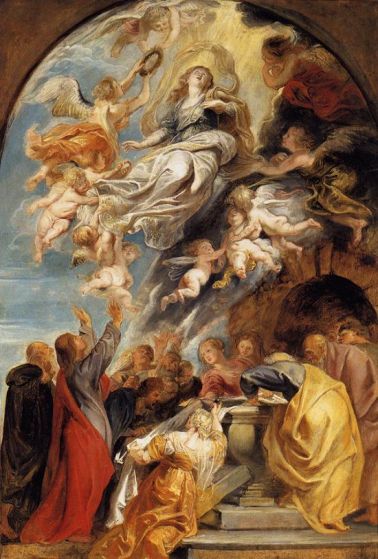
What else do I resolve? Moar Poetree. I took that Creative Writing class last quarter, which turned out (to everyone’s surprise I eventually learned) to be a poetry class. I’ve written some poems over my life. I’ve read some. I’ve railed against free verse because it is the written version of every modern art installation going. It is the manifestation of the mantra that “art can be anything, and anyone can be an artist.” Neither of those things are true, and neither is it true that hammering out a 15 line free-written run-on sentence of f-bombs and sex, then breaking it up into random lines, is always poetic. Or even artistic. Sometimes – often times – it’s just bad and inaccessibly personal. What would be the point of something like golf if it had literally no rules save requiring a club and a ball? When poetry has no rules save requiring words, there’s nothing left to be good at. There’s nowhere to put the beauty. And I’m afraid I will not back down on this one. Whatever the paint-splatterers and fecal-smudgers may pretend about art existing for shock and discomfort, they are wrong. Art is for beauty and intellectual improvement. Art can, of course, be beautiful and uncomfortable. The two are not mutually exclusive. Look at how many people are made uncomfortable by Christmas plays. Imagine the furor if something as incredible as The Assumption of Mary showed up in a courthouse.

the-assumption-of-mary

So yes, beauty can be uncomfortable, but not because it’s beautiful. Rather, because we’re not. The arrangement is supposed to be that the beauty in art can show the viewer his ugliness and help motivate him to aspire to greater things. Not that the ugliness in art can show the viewer just how ugly art can be and help motivate him to be miserable. Cans of Shit  (It’s Wiki, no pictures) come to mind, but the list is long.

I digress. I prefer (preferred) rhyme because it requires discipline where free verse eschews it. It’s harder to be good when you have limitations, and so it is better to be good when you have limitations. But I have come around. That someone simply insists his free verse is good does not make it so. I certainly don’t have to believe that it is. Also, that there are no – or fewer – rules, does not mean that free verse cannot be good. I proved that several times last quarter. Free verse can be spectacular.

So…

Moar Poetree. I carry prejudices. So do you. Saying “Welcome, refugees!” does not mean that you approach the world with harmonious magnanimity. I do not deny my prejudices. How does my prejudice work? I write a little formula in my head. It’s poetry – it’s art – so in this day and age it’s likely to be very preachy. The saying goes that all art is political. All art is politics. So, the first number in my formula is “art” and its attendant political meanings. Next we have the first poet we examined in my Creative Writing class: Naomi Shihab Nye.  “Naomi. Shihab. Nye.” Can you imagine a more wildly identity-packed name than that? She’s from somewhere that isn’t Nebraska, that’s for damn sure. So in today’s political and artistic climate, that name wields a heavy ethnic aggressiveness. When you are named like that, you are armed. You are weapons hot in the Western culture. So my equation looks like this right now:

“Art” + “Weaponized ethnicity”

This, by my calculations, can only result in one outcome:

Art + Weaponized Ethnicity = White People Suck

Unlimited license to rail against whiteness and privilege and all the dull usuals that populate places like art, where mediocrity bullies its way to power. It’s a title IX officer’s wet dream.

And so we dove into the poetry of Naomi. Shihab. Nye. I was doubtful and skeptical and preparing my defense. And we read “The Art of Disappearing.” And it was beautiful. It is beautiful. Nye is Palestinian, she is Texan, she is American, she lived in the West Bank, she went to Trinity University. She could be killing us with political accusations. But she does not. Politics exist wherever they are sought, and her poems are no exception. But she is a child in an adult’s body, writing with an informed innocence that I think is impossible if you have never been loved. I mentioned that the beauty of art can exist to show us where we are not beautiful, and to inspire us to improve. Nye’s poetry ups the ante, making me not so much aware of my ugliness, but making me feel more beautiful than before I started. Oscar Wilde said “Anybody can sympathise with the sufferings of a friend, but it requires a very fine nature to sympathise with a friend’s success.” Her poetry, I think, does that. It makes me sympathise with her success. It makes me happy for her. That’s really something. She wrote this one about time:

Burning the Old Year

Letters swallow themselves in seconds.
Notes friends tied to the doorknob,
transparent scarlet paper,
sizzle like moth wings,
marry the air.

So much of any year is flammable,
lists of vegetables, partial poems.
Orange swirling flame of days,
so little is a stone.

Where there was something and suddenly isn’t,
an absence shouts, celebrates, leaves a space.
I begin again with the smallest numbers.

Quick dance, shuffle of losses and leaves,
only the things I didn’t do
crackle after the blazing dies.

I am happy for her that she wrote that. Last night, friends and I scribbled wishes on wispy sheets of paper. Gossamer parchments. We lit them and they rose up as they burned, the ash falling slowly back down so it could be caught, carefully, and the wish could be made real. The first stanza of “Burning the Old Year” seems to have been written for that moment. What a nice way to wake up on New Year’s Day – sober and poetic.

So my other resolution: More Poetry.